
Crafting
Social, Alchemy, and Smithing turn routes into staying power
The live castle loop works best when players understand that production, field nodes, and battle drops all feed back into three distinct stations. Together they keep the map loop from feeling like battles alone.
Guild play and crafting are where gathered materials and coordinated starts become real campaign leverage. Social levels through Guild Boss and Guild War starts, Alchemy covers support and recovery, and Smithing turns ore plus monster materials into lasting gear growth.
Section 1
How materials flow into crafting
Each station depends on a different mix of production, field gathering, and monster loot.
- Social grows from coordinated Guild Boss and Guild War starts that now each require 250 steps.
- Alchemy mixes gathered reagents with slime, essence, venom, and other special drops for support brews.
- Smithing consumes ore plus themed monster materials to create weapons, armor, and accessories with role restrictions.
- This makes every march, gather trip, and battle reward relevant to later preparation choices.
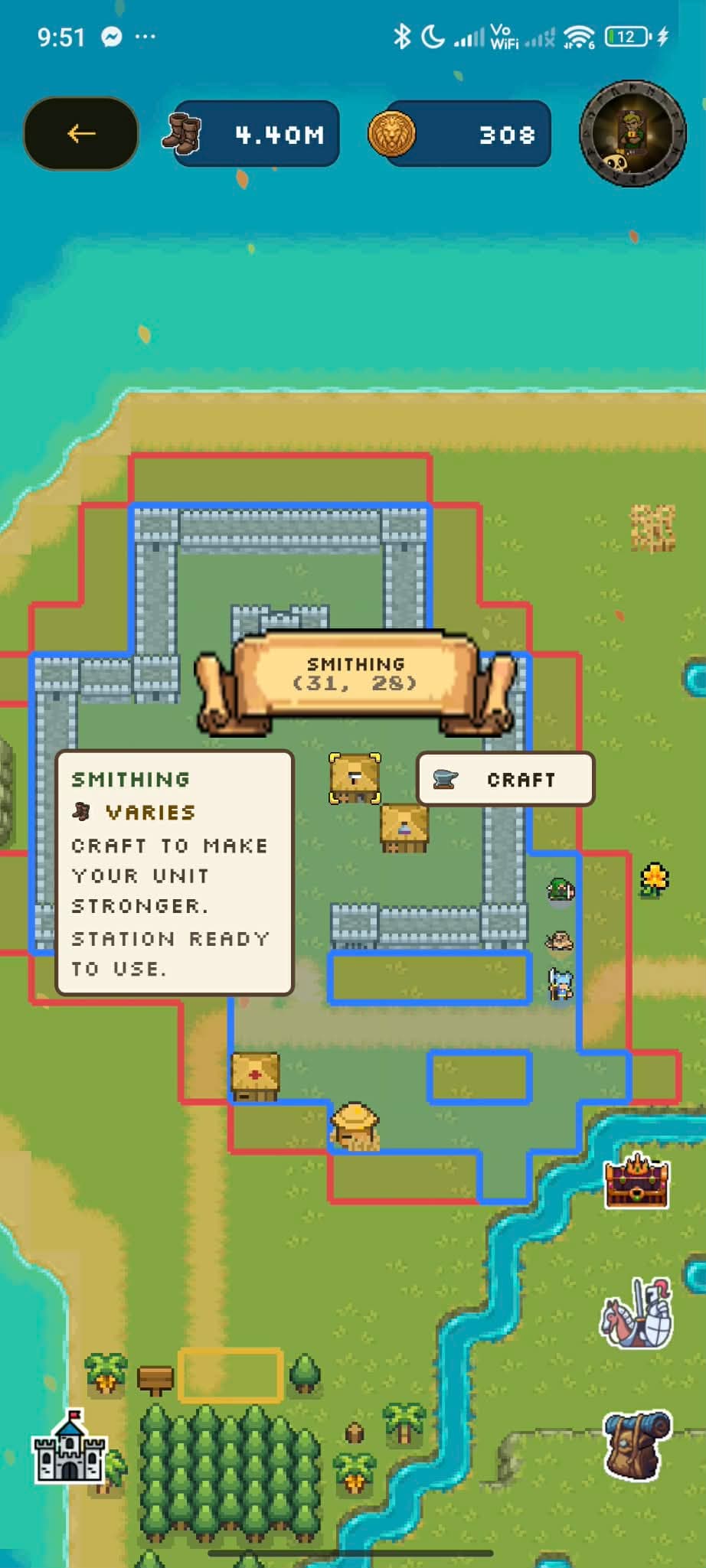
Smithing Station
The world-map smithing station where crafted gear becomes part of your long-term legion power loop.
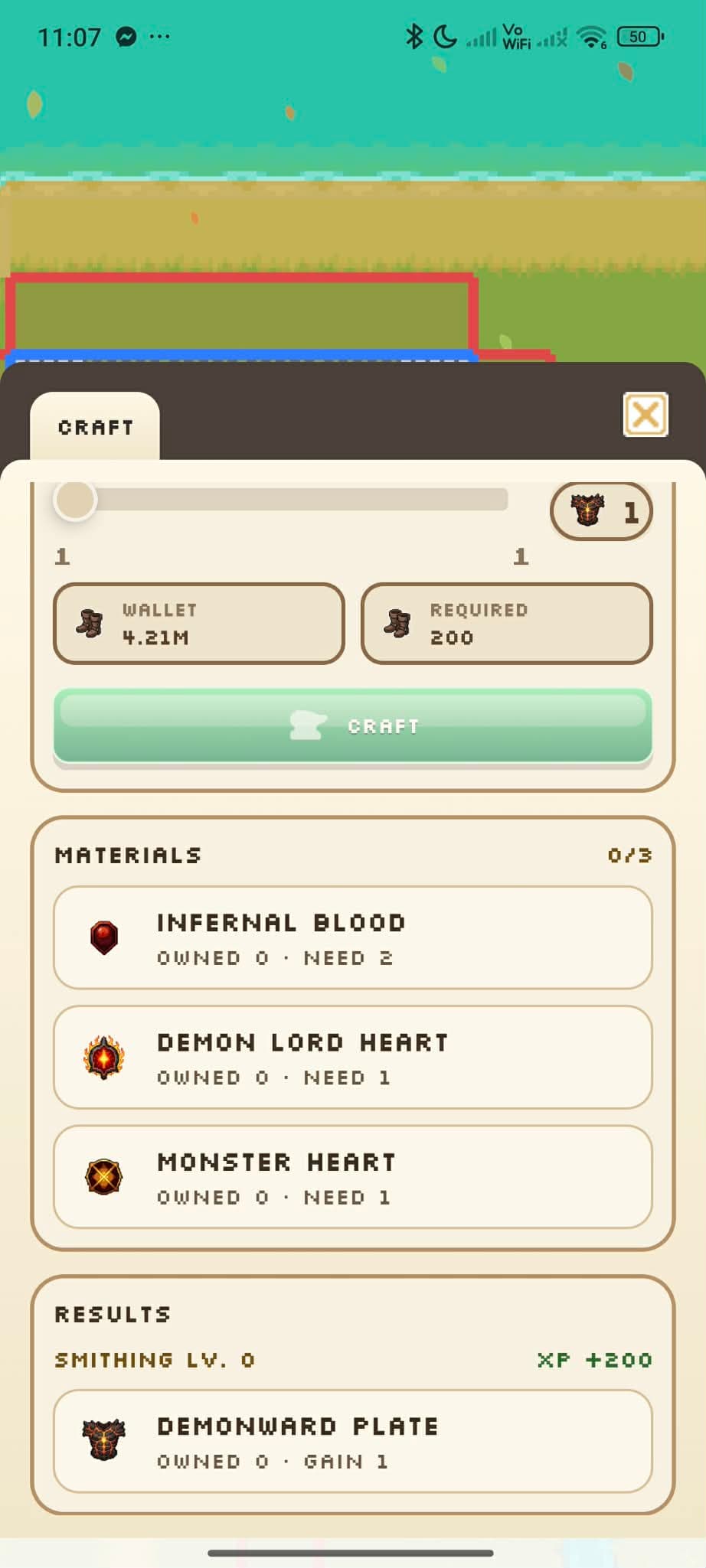
Smithing Craft Screen
A live crafting screen showing step cost, required monster materials, and the crafted armor result.
Section 2
How Social works now
The live Social system is a guild participation track, not a crafting lane.
- Social levels only when you successfully start Guild Boss or Guild War.
- Both Guild Boss and Guild War currently require 250 steps to enter.
- Each start feeds the same Social activity track used by the rank leaderboard.
- Legion prep buffs are no longer part of the live skill loop.
Section 3
What Alchemy and Smithing add
The other two stations cover sustain and permanence around the same combat loop.
- Alchemy provides recovery and tactical consumables such as healing, cleansing, and offensive support brews.
- Smithing provides lasting equipment upgrades that reinforce roles and make hard routes less brittle.
- Taken together, the three stations help players survive repeated mob clears, boss pushes, and deeper map progression without making any single buff system overpowering.
Section 4
Why smithing matters so much
Smithing is not just a flat upgrade menu. It is one of the biggest long-term power systems in the game.
- Smithing creates weapons, armor, and accessories from ore plus monster materials gathered through conquest and repeat boss farming.
- Crafted gear can roll in rarity tiers such as Common, Uncommon, Epic, Legendary, and Mythic.
- Higher rarity gear gives players access to stronger stat ceilings and more desirable builds for their units.
- That means smithing is not only about crafting an item name. It is about chasing a stronger version of that item over time.
Section 5
How procedural stats change gear value
Two players can craft the same gear family and still end up with meaningfully different results.
- Weapon and armor stats are procedural, so each crafted piece can land on different numbers and strengths.
- One roll may favor raw offense like ATK or MAG, while another may lean into HP, DEF, RES, SPD, or reactive percentage stats.
- This adds real account uniqueness because progression is not only about unlocking recipes. It is also about landing better gear rolls.
- Over time that makes smithing a chase system, where replacing decent gear with a higher-rarity or better-rolled version becomes part of the strategy loop.
Section 6
Why this matters in Arena and Guild War
Procedural gear becomes even more important once players start fighting other player-built rosters.
- In Arena, better gear rolls can decide whether a unit survives one more turn, outspeeds an enemy, or hits a key damage breakpoint.
- In Guild War, stronger crafted sets help each member's selected unit contribute more reliably to the combined guild roster.
- Because PvP-style systems compare developed accounts against each other, rarity and stat quality matter more than they do in ordinary mob farming.
- That makes smithing one of the clearest long-term separators between a basic roster and a fully tuned competitive legion.